Can a Temporary Email Be Traced? Who Sees Which Signals
See which identity signals a website, an email sender and the inbox provider can each observe, without confusing address separation with anonymity.
Yes and no, depending on who is looking. A temporary address hides your regular email from the site you give it to, and it gives senders an address that soon leads nowhere. It does not hide your visit, your device, or anything else you submit. The honest answer is a list of observers and what each one can still see.
Short answer: address separation is not anonymity
When you register with …@chuan.info, the site records that address instead of your real one. If its database later leaks, the leaked field is not the address tied to your banking and recovery accounts. That is a real reduction in exposure.
But "the site does not have my email" is a narrow statement. The site watched you arrive, served you pages, and collected everything else in the session. Anonymity would mean none of that connects to you, and an email address alone cannot deliver that. It swaps one identifier while leaving the rest of the session's signals intact.
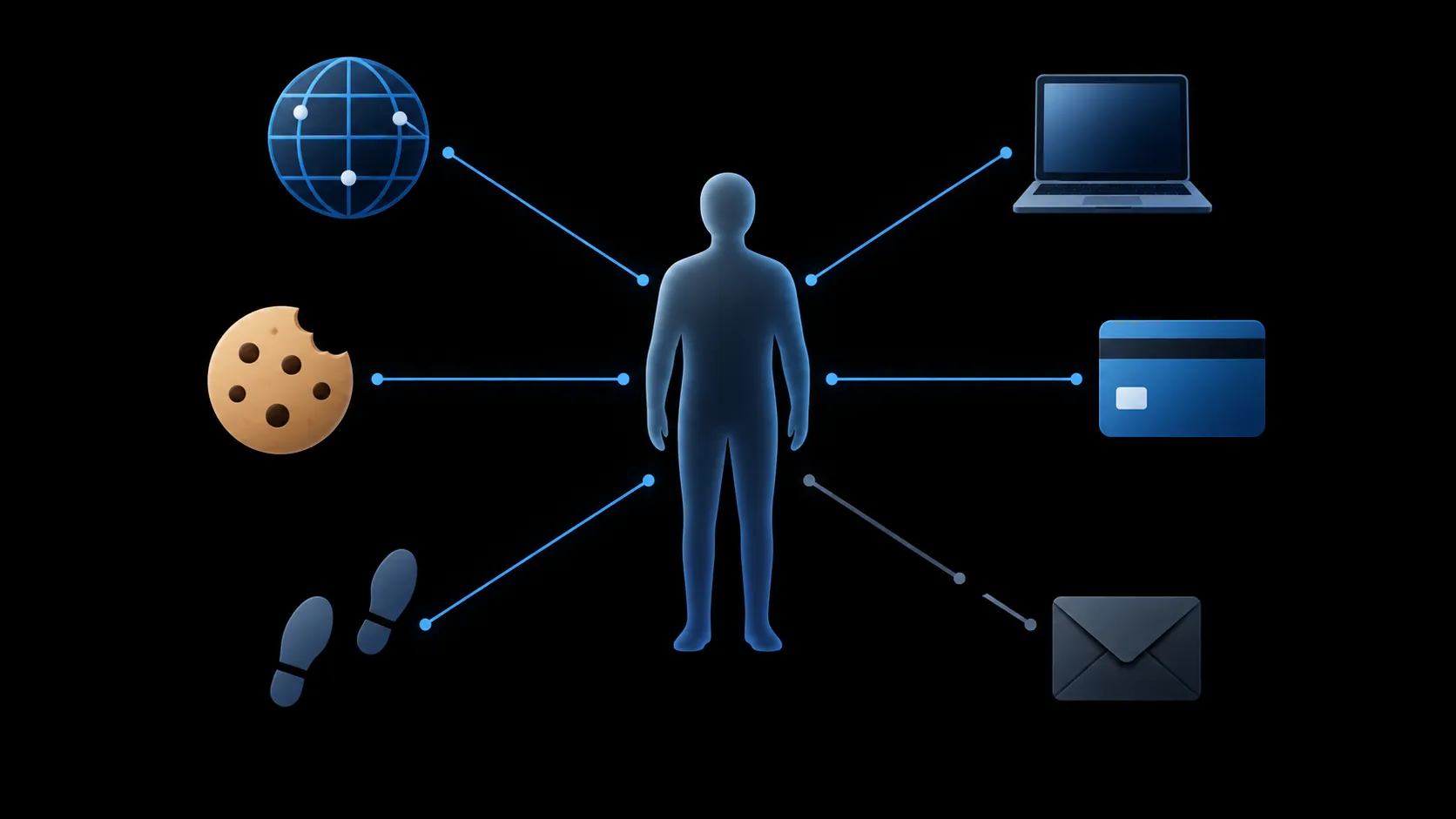
What the website can still see
The site you sign up with is the observer with the most material. Beyond the address field, it can log:
- Your IP address and approximate network location. Whatever address you typed, the request came from your connection.
- Cookies and browser storage. If you visited before under a different address, first-party storage may tie the sessions together.
- A browser fingerprint. As the EFF's Cover Your Tracks explains, browsers expose enough configuration detail—fonts, screen, timezone, extensions—to identify many visitors without cookies. Changing your email changes none of it.
- Everything you entered. Name, phone, billing, shipping, and account settings are the site's record, whatever inbox the confirmation goes to.
- The address itself.
chuan.infois a public, recognizable domain. A site can see you used a disposable-domain address, block it, or simply note it—which is why a temporary address is not a disguise, just a different identifier.
What the sender and the inbox service process
Two more parties sit on the mail path.
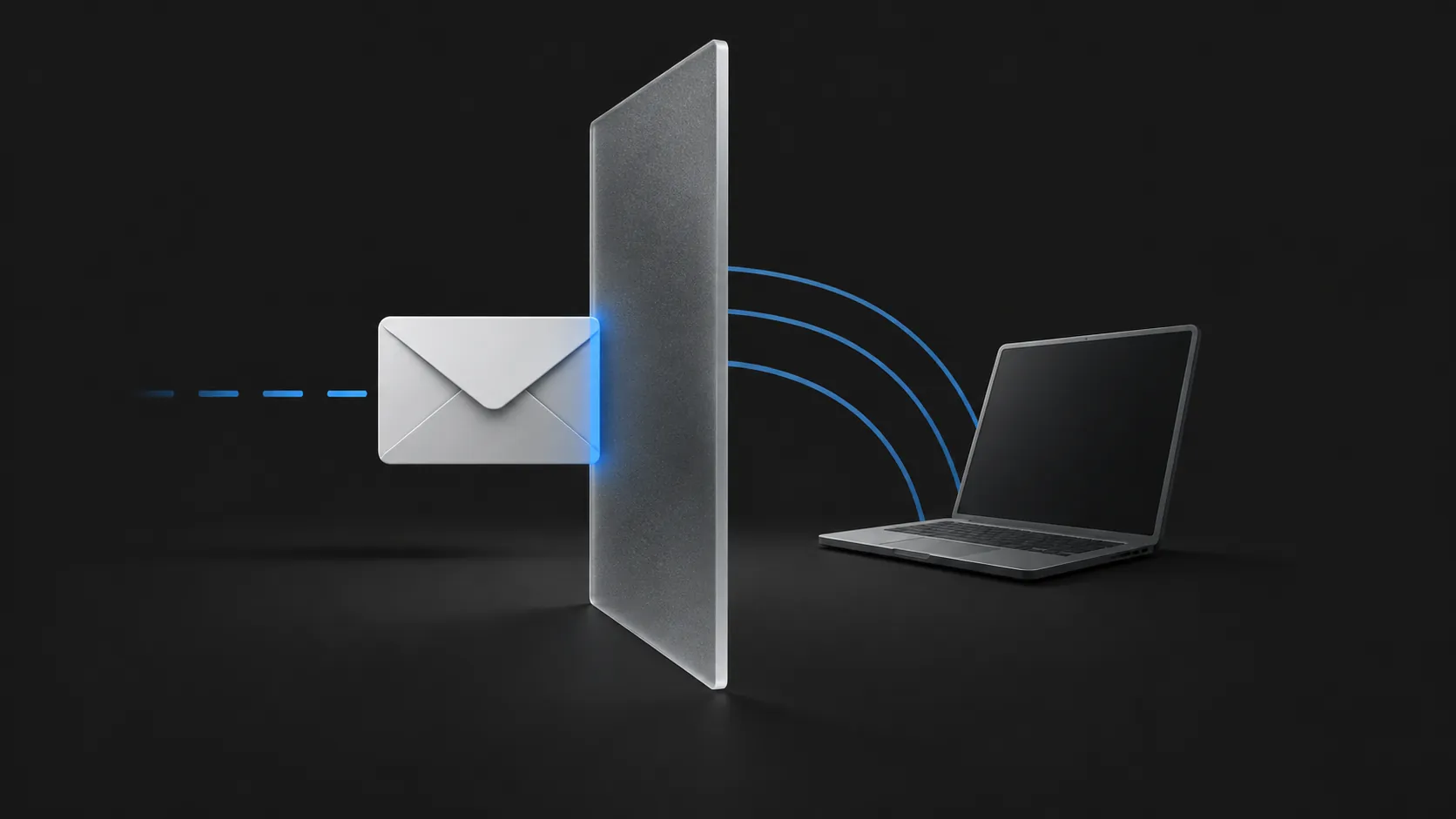
The sender learns what its own messages reveal. Mail that references remote images can report an open when your mail client fetches them—Microsoft has documented BEC campaigns embedding a 1×1 tracking pixel to confirm which recipients opened a message. Apple Mail's Mail Privacy Protection counters this on Apple devices by hiding your IP and fetching remote content privately in the background, though it does not cover links or attachments. TempMail.Best takes a stricter route: message bodies render in a sandboxed frame that only permits embedded data: images, so remote tracking images in the HTML are not fetched at all. Click a link, though, and you leave the sandbox—the destination site sees your normal connection like any visit.
The inbox service necessarily processes your mail to deliver it. For TempMail.Best, the honest picture is: the site runs on Cloudflare, which handles requests and incoming mail as infrastructure; each inbox stores at most its 20 newest messages; and the mail-processing logs do not record recipient addresses, subjects, bodies, or access credentials. "Does not record" applies to those specific logs—it is not a claim that no system anywhere touches your traffic. One more disclosure from the service's privacy policy: to draw sender avatars, your browser may request images from gravatar.webp.se and unavatar.webp.se, which receive request metadata like your IP and user agent plus a hash of the sender's address—never the message content or your temporary address.
What expiration changes
Your browser session is held in a Secure HttpOnly cookie; an AI assistant instead reaches its own inboxes through a separate credential. Neither channel makes you anonymous—they are just different keys to a mailbox. When the 10-minute or 1-hour lifetime ends (or you stop the inbox early), the address and its stored messages are deleted, and mail sent to the address afterward is dropped rather than delivered.
That deletion cuts two things. It removes this service's copy of the messages, so there is no archive sitting around to be leaked or requested later. And it makes the address useless as a route to you—no password resets, no follow-up mail, nothing. What it cannot cut is everything already outside the mailbox: the account record at the site, its server logs of your visit, and any data you submitted all remain where you left them.
A realistic privacy expectation
A temporary address buys you one specific thing: the email field in one site's records points at an inbox that will soon not exist, instead of at an address that identifies you across services for years. It does not buy invisibility. Sites can still log your network and device, senders can still learn when you click, and the infrastructure carrying your mail still carries it.
So use the tool for what it measures. For a low-risk signup where the address is the main thing you would rather not share, a temporary inbox is proportionate. When a signup also involves your name, payment, or a relationship you need to keep, address choice belongs to a broader plan—assigning addresses by layer and trimming form fields is covered in the three-layer email plan, and the follow-up exposure when a service leaks anyway is covered in the data breach article. For a wider view of what disposable inboxes do and do not protect, see is temporary email safe.